
- Characteristics of agriculture
- Characteristics of the agricultural landscape
- Farming systems
- Population
- Type of agriculture
- Agriculture today
- Livestock in the world
- Fishing in the world
- The primary sector in Europe
Agriculture, animal husbandry and forestry, which have traditionally been joined by fishing activities, constitute a specific sector of economic activity: the primary sector. This includes the set of activities related to obtaining natural resources that will be used in manufacturing activities of other goods or in the production of food.
The activities included in the primary sector are:
- Agriculture, which includes all those activities that cultivate the land to obtain raw materials or food, such as flax, cereals, and fruit.
- Animal husbandry encompasses all those activities that raise animals to obtain raw materials or food, such as leather and meat.
- Silviculture or forest exploitation deals with the harvesting and exploitation of wood from forests and/or plantations, as well as other raw materials, such as cork and resin.
- Fishing includes the capture of different species of fish, molluscs and crustaceans, as well as their aquaculture ( cultivation of aquatic species) .
Characteristics of agriculture
There are several physical and human factors that explain the diversity and location of agricultural activity:
- The natural conditions. The climate, relief and type of soil explain the distribution of the different crops:
- The climate determines the temperature and humidity, which condition the development of crops. Each crop needs certain climatic conditions to develop. Excessively low or high temperatures, or a lack of precipitation, limit or prevent their development.
- The relief: flat lands are more suitable for agricultural work, especially if it is mechanized, and not all soils are equally fertile.
- The type of soil conditions the retention of water, and the acidity conditions the fertility. The agricultural use of the soil depends on its texture and acidity.
- The increase in world population requires a higher production of food, so it is necessary to have agricultural land.
- Agrarian policies. Governments and international organizations implement improvement plans that contribute to agricultural development.
- The technical means and the final destination of the crops. In the world we find different agricultural spaces depending on the techniques used and the use of machines and chemicals: subsistence agriculture (self-consumption) and market agriculture (sale).
Characteristics of the agricultural landscape
The agricultural landscape is the natural landscape modified by humans to obtain products from nature and which has evolved to increase their use. The elements that characterize agricultural landscapes are plots, farming systems and population.
The plots are the divisions of the agricultural land and can be differentiated by: the dimensions (minifundis or small plots, and latifundis or large plots), the shape (regular or irregular) and the limits (closed or open). According to these criteria, we can distinguish two types of landscapes:
- Landscapes of open fields. They are made up of open plots and regular shapes, without fences to delimit them. They are common landscapes of Central Europe.
- Landscapes of closed fields or bocage. They are characterized by closed plots, of irregular shapes and delimited by walls or fences. They are typical landscapes of Atlantic Europe.

Farming systems
Depending on the cultivation systems, they are distinguished: polyculture or monoculture; irrigated or dry; intensive or extensive agriculture. To obtain agricultural products, farmers use several farming techniques or systems:
In polyculture, the agricultural space is divided into many plots, where different species are grown. In monoculture, the space cultivates a single product.


Stocksnap.
Nature (Pixabay License)
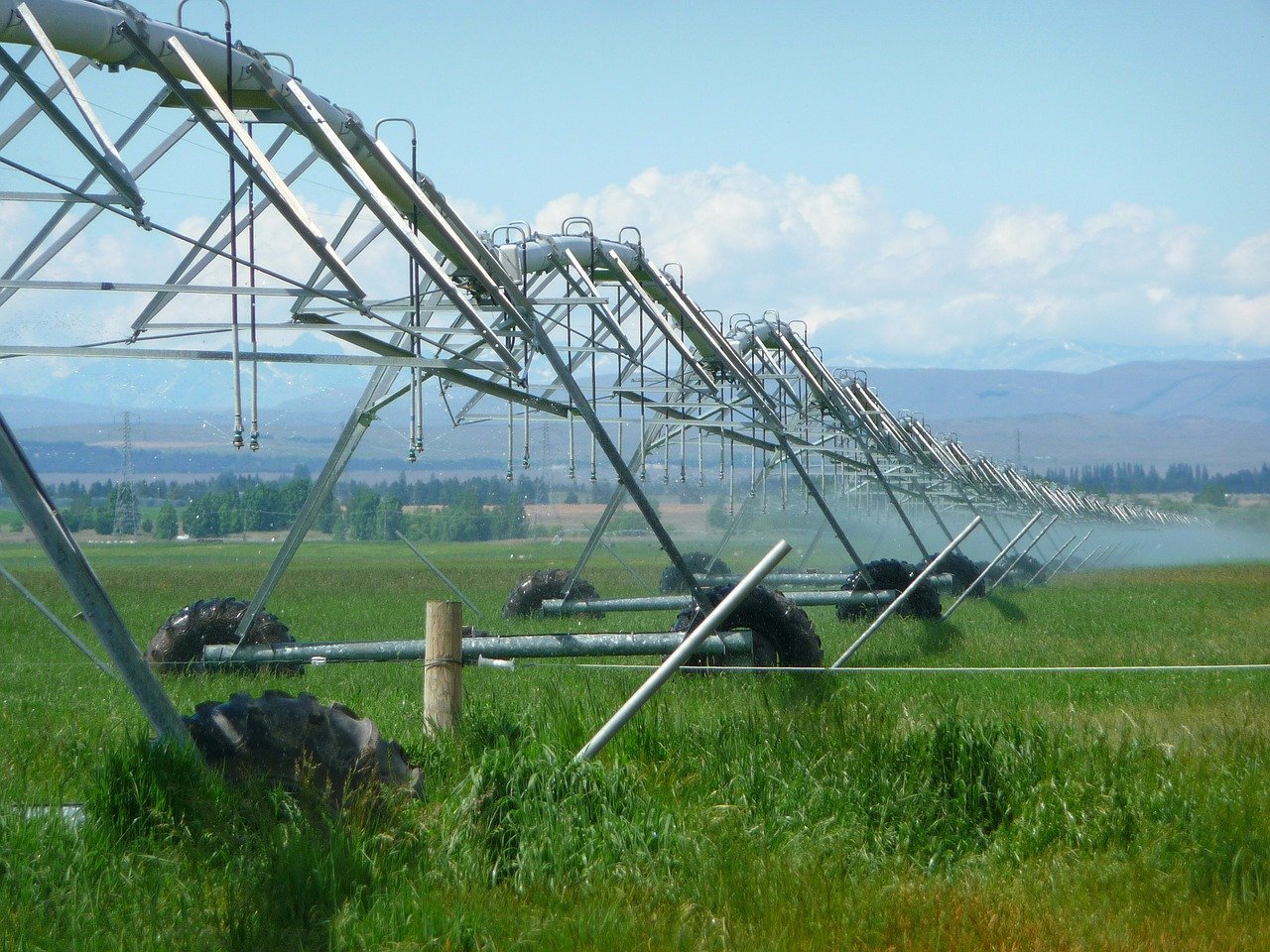
In irrigated landscapes, water is extracted from the subsoil or from reservoirs and, by means of canals, is led to the fields. Rainfed crops only receive water from rain.

MemoryCatcher.
irrigation (Pixabay License)
Intensive agriculture produces the largest amount of products in the smallest possible space. The extensive is practised in places with a lot of land in order to obtain large quantities of the cultivated products at a low price.


Population
Settlement is the settlement of the population in a territory, and this leads to a transformation of the landscape. The rural population is the inhabited part (where people live) of the rural area, and it can be of two types:
- Concentrated rural population, when houses are grouped together. In these towns, the inhabitants have numerous services to satisfy their needs.
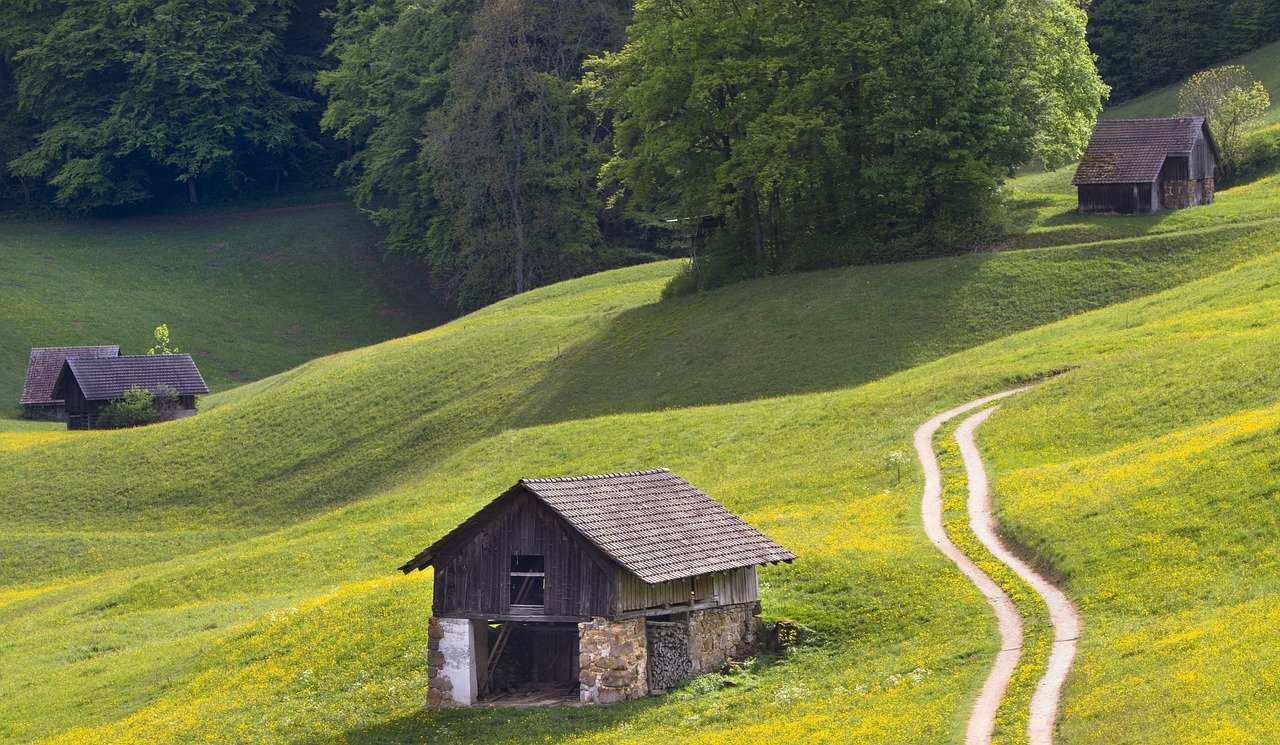
- Dispersed rural population, when the houses are isolated from each other. In the Balearic Islands, this type of settlement is made up of isolated farms, neighbourhoods, villages, and places and possessions.
- Interspersed population : it is a combination of the previous ones.

Andreas.
scale (Pixabay License)
Currently, 39% of the world’s population lives in rural areas, although there are very large differences between continents and countries.
Type of agriculture
Subsistence agriculture
Subsistence agriculture produces everything that is necessary for survival. Grows mostly products for self-consumption. This type of agriculture uses rudimentary farming techniques and is based on those developed during the Neolithic. The constant exploitation of the land, the low efficiency of farming techniques and the poor quality of the seeds mean that the yield is very low. The people who practice it tend to be poor and vulnerable to all kinds of calamities.
Three types of subsistence agriculture stand out:
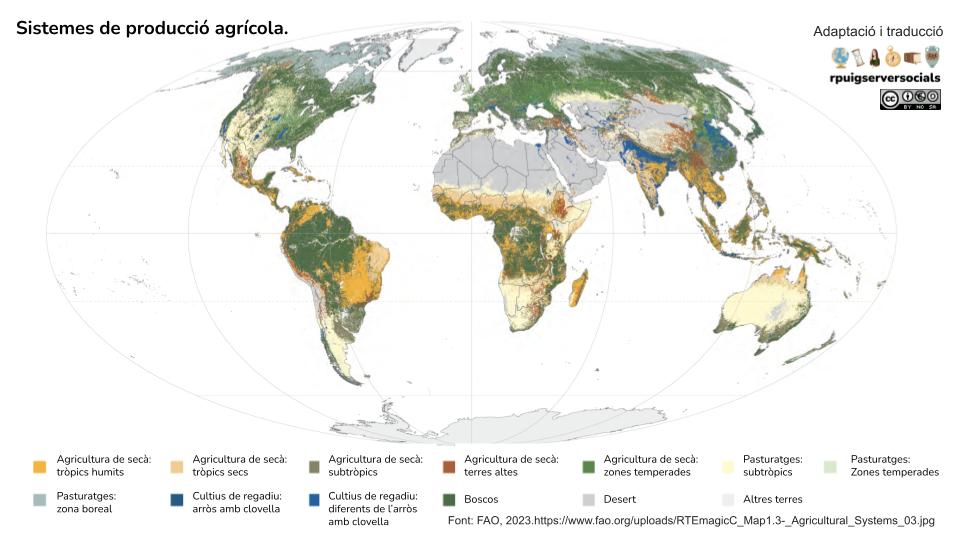
- Itinerant Burning Farming: You get fields by burning a part of the forest or savannah. The fields only remain fertile for three or four years, and so they are abandoned and new land is slashed and burned. It is practised in Africa, South America and some areas of Asia.
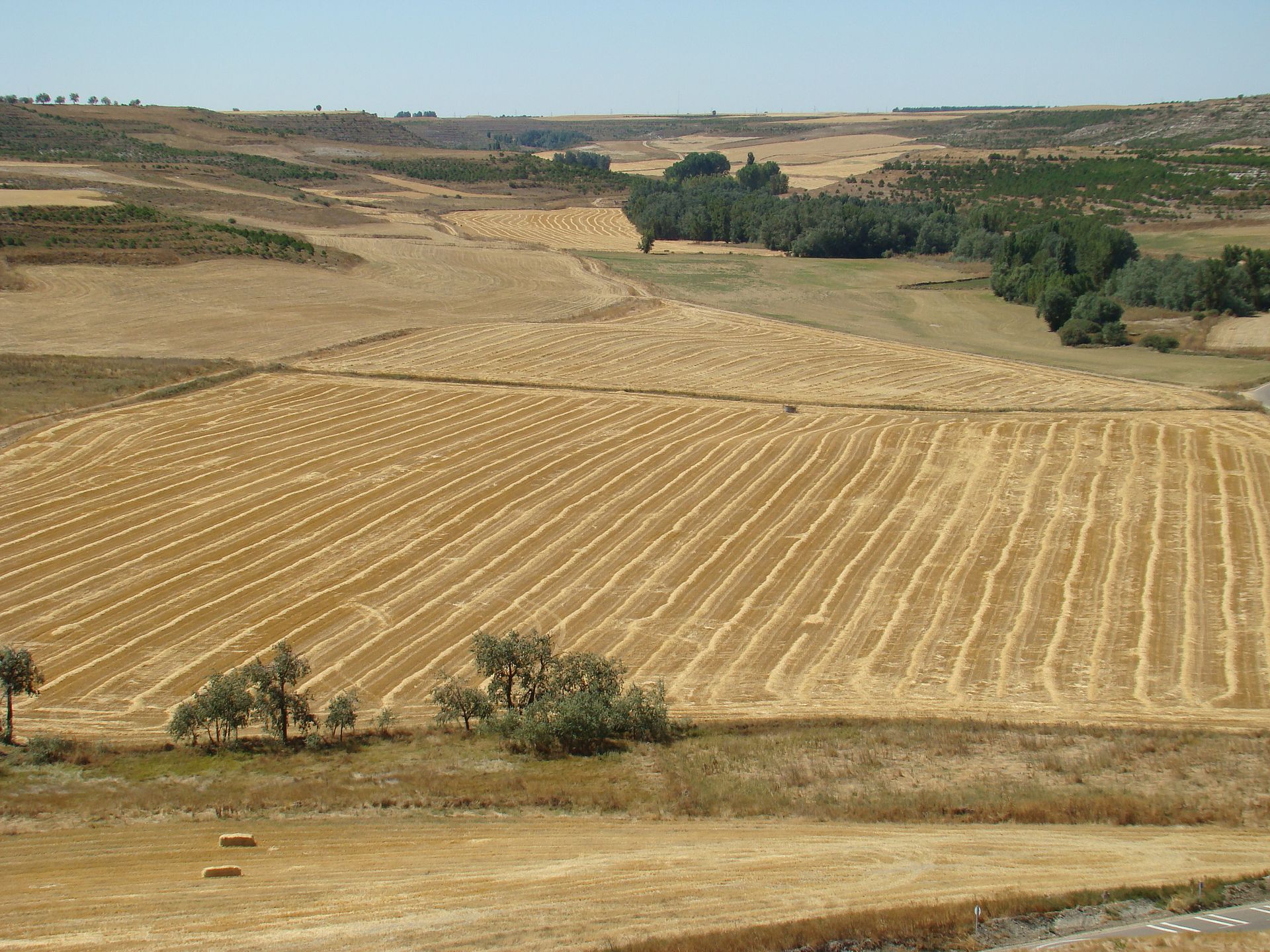
- Extensive rained agriculture: uses fallow to let part of the land rest, and also the manure produced by livestock. It is made in the dry areas of Africa.
- Irrigated rice farming: it is typical of monsoon regions, with abundant rains. It is very intensive, productive and uses a lot of manpower.


Market Agriculture
The shift from subsistence agriculture to market agriculture began in developed countries with the Industrial Revolution. Market farming has two major goals, increasing sales and reducing costs. All this is achieved through:
- The mechanization of the field, which saves labour, increases production and makes it possible to reduce the prices of agricultural products.
- The specialization of agricultural production, which allows increasing production with lower costs.
- Agile and fast marketing, which uses suitable transport for each type of product.
Speculative farming yields huge profits. Includes
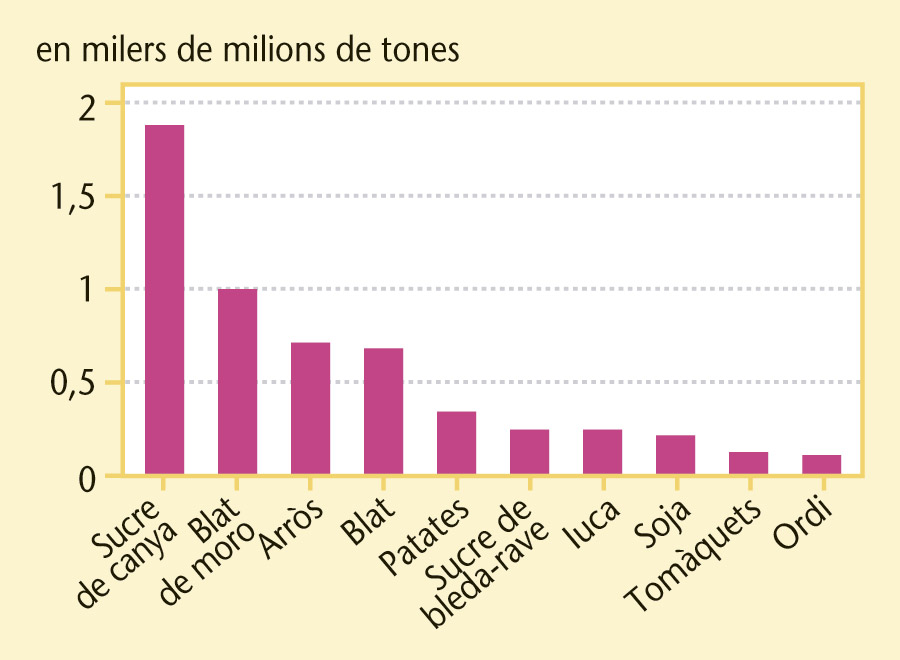
Plantation agriculture : These are large monoculture farms (coffee, tea, sugar cane, cotton…) in tropical areas. It is highly technical and export-oriented agriculture, so it depends on the demand of international markets and its competitiveness in price.
Extensive cereal agriculture : It is typical of the great plains of the United States, Canada and Australia. It is a highly mechanized agriculture that requires very little labour and is very profitable. Cereals (wheat, rye, Indian wheat) and oilseeds (soy, sunflower) are grown for export.
Modern Mediterranean agriculture : Irrigated crops (fruit and vegetables) stand out, which are more profitable than rain-fed crops. Greenhouses and products with designation of origin have made it possible to increase this profitability.
Agriculture today
The cultivation of the land is the basis of the wealth of countries and is key to the development and well-being of people: it is the basic source for obtaining the food we consume.
Cereals are the most important food source, but new consumption trends (healthy lifestyle models) have increased the production of vegetables and fresh fruit.
At present, agriculture represents 3% of the total value of world production, compared to 27% of industry and 70% of the tertiary sector.
However, there are notable differences between developed and developing countries.
Equally, the number of people working in this sector presents differences according to the development of each country.
Although traditional forms of agriculture are maintained, export-oriented market agriculture has developed in large regions of the planet.
Scientific progress has made it possible to plant crops in new areas and increase productivity per hectare. But the use of pesticides or genetic modification also have harmful effects on people’s health and the balance of the natural environment.

Livestock in the world
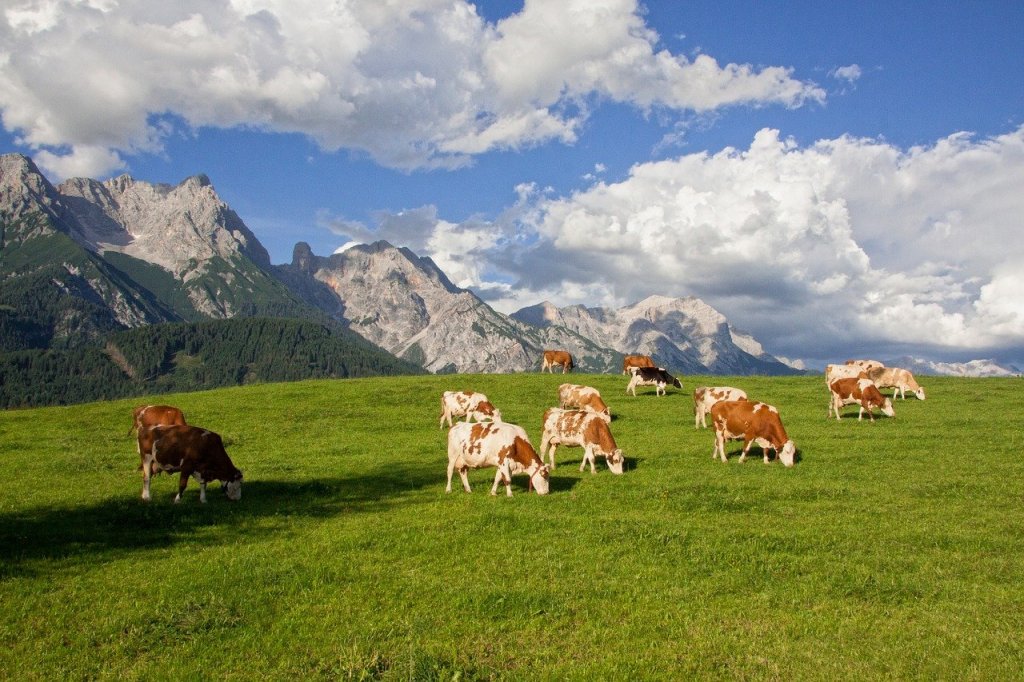
Traditional animal husbandry is usually a complement to agriculture. Herds tend to be small and provide meat, milk or wool, as well as labor and fertilizers for the fields. It is practiced in intertropical areas, in some monsoon areas and in some Mediterranean areas.
Traditional or subsistence farming insists on obtaining products of animal origin for self-consumption. This type of animal husbandry is usually a complement to agriculture, since the animals are used to work the field and the excrement is used as fertilizer.
Peasants have small herds of sheep or goats, which provide them with milk, meat and wool. Cattle feed on crop residues or graze freely on the uncultivated plots and in the nearby mountains.
Commercial or market livestock has the same objectives as agriculture, to sell the production and obtain the maximum profit. It can be of two types:
- Intensive livestock : invests a lot of capital in farms, where cattle are raised in stables, fed with feed. This model is common in poultry farming and cattle breeding; the latter can also be partly fed with pasture (semi-stabulation). This breeding is practiced in very specialized farms and the result is the obtaining of many specimens in a small space.
- Extensive livestock: cattle (cattle or sheep) graze freely. This livestock farming is practiced in places that have a lot of pasture land. It requires little labor because the herds graze freely.

Matthias Boeckel.
cowshed (Pixabay)
The main livestock species are cattle, sheep and pigs. The best quality cattle are raised in the temperate flatlands. Sheep cattle adapt to various climatic situations and stand out, above all, in Asia and Oceania. Pig cattle are also raised in various areas, both temperate and warm climates. In certain regions of the planet, other species are more important, such as goats and horses, llamas or alpacas, as well as rabbits (rabbit farming) and poultry (poultry).
Fishing in the world
Fishing is based on the exploitation of the animal resources of the sea. Two types of fishing are currently distinguished: the traditional or artisanal and the industrial.
Traditional or artisanal fishing
Artisanal fishing is carried out close to the coast and uses human power and simple fishing gear. This type of traditional fishing is maintained in less developed regions. Production is scarce and serves, basically, for self-consumption. Only a small part is allocated to the market.
Fisheries-related activities are very important for developing countries, as they represent an important source of employment, nutrition and food security. In rich countries, traditional fishing is practiced to catch only highly prized species, such as lobster.
Commercial fishing
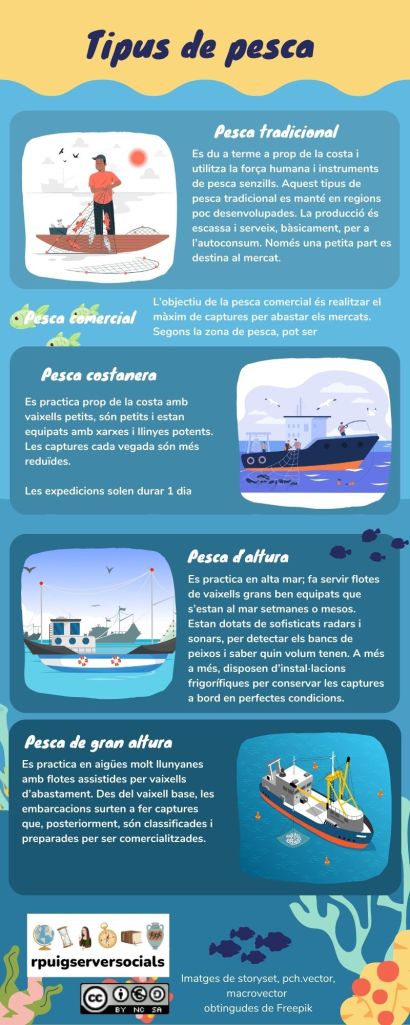
The objective of commercial fishing is to make the maximum catches to cover the markets. Significant financial resources are invested to have a good fishing fleet, which has state-of-the-art technology to increase catches, and good port infrastructures
- According to the place where it is practiced, industrial fishing is classified into:
- Coastal fishing : practiced close to the coast with small boats, they are small and equipped with powerful nets and lines. Catches are getting smaller and smaller,
- Deep-sea fishing : it is practiced on the high seas; it uses fleets of large, well-equipped ships that are at sea for weeks or months at a time. They are equipped with sophisticated radars and sonars, to detect schools of fish and know how big they are. In addition, they have refrigeration facilities to preserve the catches on board in perfect conditions.
- Large-scale fishing : it is practiced in very distant waters with fleets assisted by supply ships. From the base vessel, the boats go out to make catches which are subsequently classified and prepared for commercialization.
Main fishing areas
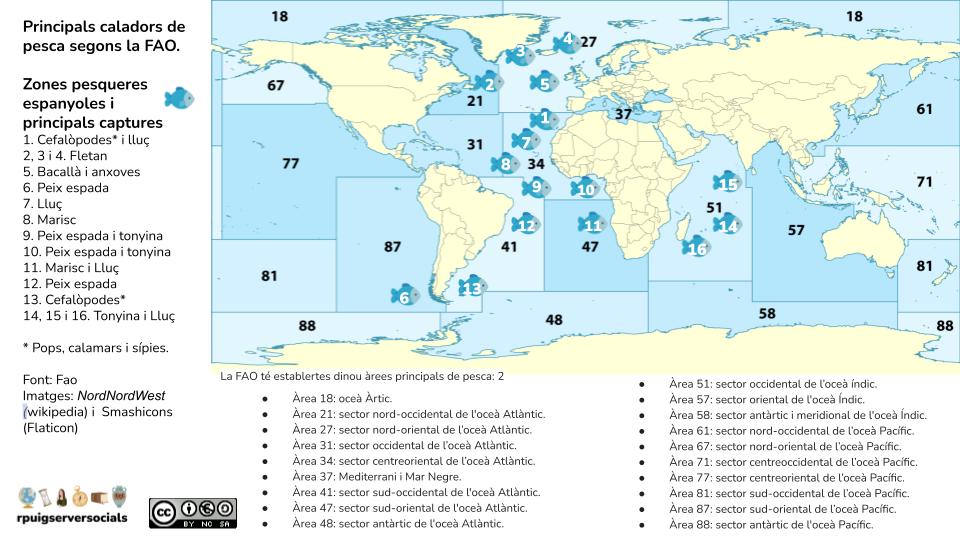
Not all parts of the sea are equally rich in fishing. Catches are more abundant in places called fishing grounds, which are usually located:
- In areas where the continental shelf is extensive.
- In the areas of contact between cold and warm sea currents.
- In coastal areas near which a cold sea current passes.
The problems of fishing
The fishing sector currently has three serious problems:
- Overfishing is a consequence of the use of efficient techniques and large fleets, which have led to the overexploitation of fishing grounds .
- The lack of free fishermen is a consequence of the expansion of jurisdictional waters, which has imposed the dominance of the states on the fishermen.
- The increasing pollution of coastal waters due to toxic industrial dumps and frequent oil spills caused by oil tanker accidents.
Although the oceans are an important food reserve, their resources are limited. It is essential to ensure sustainable exploitation of marine resources, which regulates catches and allows the recovery of fishing grounds. Some international organizations work in this direction and therefore establish strict fishing regulations, while at the same time trying to repopulate the sea with artificial fish breeding.
Aquaculture could be a solution: it consists of replacing the predation system with the breeding and fattening of marine animals and plants in pools, ponds or well-defined and closed areas .
The impact of human action on the oceans
The overexploitation of the seas, caused by the large volume of fishing activity and the use of industrial techniques, has brought many fishermen to the limit of their survival. To limit the damage, measures have been put in place such as biological shutdowns , or periods in which fishing is not authorized in fishing grounds so that they recover; establishment of catch quotas, which put a limit on the number of specimens that can be caught in each campaign; measures to use wider and thus more selective nets, etc. It’s about ensuring a sustainable future for our oceans.
Next to fishing, there are other human activities that harm this medium. Among them, the consumption and management that we have done of plastics so far stands out . Only 9% of plastic waste is recycled, the rest ends up in landfill and in the environment, where it breaks down into small particles that damage the air, water and marine fauna. Much of this plastic ends up in seas and oceans in the form of micro plastics or, when they are larger, they form what are known as ” floating landfills “.
The primary sector in Europe
As we know, the European Union (EU) is a geopolitical entity but also a unique economic association in the world, made up of twenty-seven countries, with numerous natural conditions and a mosaic of rural landscapes.
The division into economic regions is differentiated, not only between countries, but within them. To promote economic and social cohesion, different community policies are implemented, such as the PAC (Common Agricultural Policy); as well as the cohesion funds: Rural Development Agricultural Fund (FEADER) and the Maritime and Fishing Fund (FEMP).
Employed population Agriculture 2019
| Area | Value (annual average) | % of total |
|---|---|---|
| Spain | 781,6 | 4,0 |
| Euro zone | 4.094,9 | 2,8 |
| European Union | 8.179,3 | 3,6 |
| Units: Thousands. Source: Idescat . | ||
In the European Union, the agricultural and food sectors together represent 7% of all jobs and generate 6% of its Gross Domestic Product . The primary sector uses little active population, but has high productivity. Despite its small weight, the annual budgetary investment in the CAP is very high within the overall EU budget. The CAP is a policy common to all member states, which is managed and financed at European level with resources from the EU’s annual budget.
The Common Agricultural Policy (CAP)
The Common Agricultural Policy, launched in 1962 , represents a partnership between agriculture and society , between Europe and farmers. Its main objectives are:
- Improve agricultural productivity, so that consumers have a stable supply of food at affordable prices;
- guarantee EU farmers a reasonable living.
These principles have guided investments and policies that have been modified based on the new economic and social needs of the European Union.
In the early years, the CAP encouraged farmers to use modern machinery and new techniques, including chemical fertilizers and plant protection products. It was necessary, because the priority at that time was to grow more food for the population.
This policy gave rise, in the eighties, to food surpluses , surpluses that were stored and generated “mountains of food”. From 1992 , coinciding with the Rio Summit and the appearance of the principle of ” sustainable development “, farmers were encouraged to be more respectful of the environment. The 2003 reform focused on orienting the policy towards producers, who receive income support on the condition that they tend to agricultural land and comply with environmental, animal welfare and food safety standards. A proposal was made in 2011 to strengthen the competitiveness of the agricultural sector, promote innovation, combat climate change and support employment and growth in rural areas.
Finally, a new reform has been approved in 2020 that will affect the destinations of the primary sector until the end of the decade.
Bibliography
- http://buxaweb.cat/dossiers/sectorprimari.htm
- Miryam Hernando Leal. Itinerario. El sector primario. Geografía e Historia 3.º ESO. Colección “Itinerarios didácticos” INTEF,
 rpuigserversocials.com
Per publicar un comentari heu de iniciar sessió.